
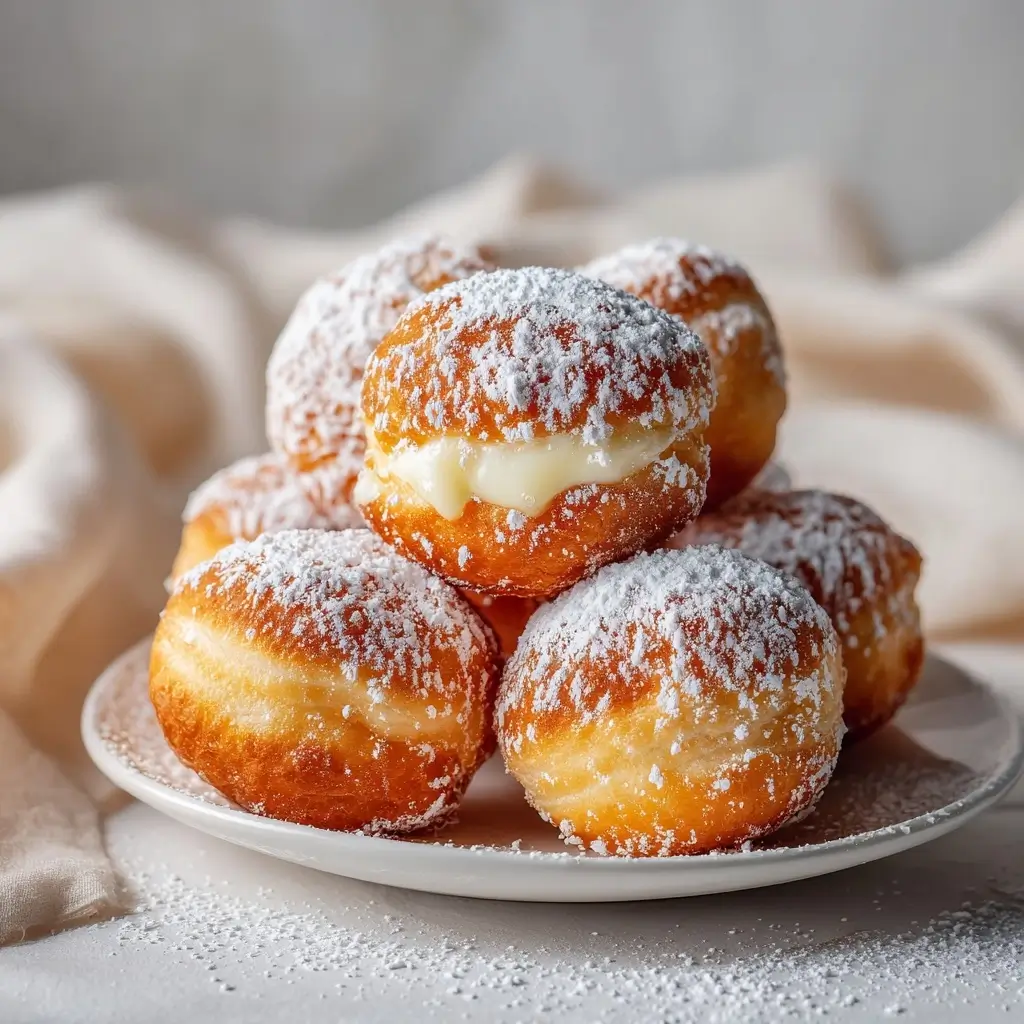
These vanilla French beignets are soft, pillowy, and lightly sweet with a golden finish that feels special without being fussy. They are the kind of treat that turns an ordinary morning into something worth lingering over, especially with a dusting of powdered sugar.
Vanilla French Beignets
Equipment
- 1 Large bowl
- 1 Deep pot or skillet for frying
- 1 Rolling Pin
- 1 Thermometer recommended
- 1 Paper towels for draining
Ingredients
- 4 cups all-purpose flour
- 2.25 tsp active dry yeast
- 1 cup warm milk
- 0.25 cup granulated sugar divided
- 0.5 tsp salt
- 2 eggs
- 4 Tbsp butter melted and cooled slightly
- 1 tsp alcohol-free vanilla
- as needed vegetable oil for frying
- as needed powdered sugar for dusting
Instructions
- Warm the milk until it feels just comfortable to the touch, then stir in the yeast and a spoonful of sugar. Let it sit until foamy so you know the yeast is active and ready to work.
- In a large bowl, combine the flour, remaining sugar, and salt. Add the yeast mixture, eggs, melted butter, and alcohol-free vanilla, then stir until a shaggy dough forms.
- Turn the dough onto a lightly floured surface and knead until it becomes soft, smooth, and slightly elastic. If the dough feels sticky at first, a light dusting of flour can help, but avoid adding too much.
- Place the dough in a greased bowl, cover it, and let it rise in a warm spot until doubled in size. This is the step that gives the beignets their airy texture.
- Punch down the dough gently, then roll it out to an even thickness. Cut it into squares or rectangles, depending on the shape you prefer.
- Heat the oil in a deep pot or skillet, then fry the beignets in batches until puffed and golden on both sides. Transfer them to a paper towel lined plate to drain briefly.
- While the beignets are still warm, dust them generously with powdered sugar. Serve right away for the best texture and flavor.
Notes
Why You’ll Love This Vanilla French Beignets
There is so much to love about these beignets. The dough is tender and airy, the vanilla adds a warm bakery-style flavor, and they fry up with crisp edges and a fluffy center. They are perfect for brunch, dessert, or a cozy weekend bake when you want something homemade and memorable.
Vanilla French Beignets Ingredients & Substitutions
Here is what you will need to make them:
- All-purpose flour, for the soft dough base.
- Active dry yeast, to help the beignets rise.
- Warm milk, which wakes up the yeast and adds richness.
- Sugar, for gentle sweetness.
- Salt, to balance the flavor.
- Eggs, for structure and tenderness.
- Butter, melted and cooled slightly.
- Alcohol-free vanilla, for that classic vanilla aroma.
- Vegetable oil, for frying.
- Powdered sugar, for finishing.
Substitution ideas are simple. You can use bread flour for a slightly chewier bite, or swap whole milk for 2 percent milk if that is what you have on hand. If you want a more fragrant finish, add a little extra alcohol-free vanilla to the dough or the sugar dusting.
Step-by-Step Instructions to Make Vanilla French Beignets
1. Activate the yeast
Warm the milk until it feels just comfortable to the touch, then stir in the yeast and a spoonful of sugar. Let it sit until foamy so you know the yeast is active and ready to work.
2. Mix the dough
In a large bowl, combine the flour, remaining sugar, and salt. Add the yeast mixture, eggs, melted butter, and alcohol-free vanilla, then stir until a shaggy dough forms.
3. Knead until smooth
Turn the dough onto a lightly floured surface and knead until it becomes soft, smooth, and slightly elastic. If the dough feels sticky at first, a light dusting of flour can help, but avoid adding too much.
4. Let it rise
Place the dough in a greased bowl, cover it, and let it rise in a warm spot until doubled in size. This is the step that gives the beignets their airy texture.
5. Roll and cut
Punch down the dough gently, then roll it out to an even thickness. Cut it into squares or rectangles, depending on the shape you prefer.
6. Fry until golden
Heat the oil in a deep pot or skillet, then fry the beignets in batches until puffed and golden on both sides. Transfer them to a paper towel lined plate to drain briefly.
7. Finish with sugar
While the beignets are still warm, dust them generously with powdered sugar. Serve right away for the best texture and flavor.
Tips for Success
- Keep the milk warm, not hot, so it does not slow down the yeast.
- Let the dough rise fully for the softest, lightest beignets.
- Do not overcrowd the pan, since that can lower the oil temperature.
- Fry in batches and keep the oil steady for even browning.
- Dust with powdered sugar while warm so it clings beautifully.
Variations of Vanilla French Beignets
You can make these beignets your own in a few easy ways. Try adding a pinch of cinnamon to the dough for a warmer flavor, or finish them with a light drizzle of simple glaze instead of powdered sugar. You could also fill them with fruit preserves after frying for a sweet surprise in the center.
Serving Suggestions: What to Pair with Vanilla French Beignets
These pair beautifully with hot coffee, café au lait, black tea, or a glass of cold milk. For a brunch spread, serve them alongside fresh berries, scrambled eggs, or a fruit salad to balance the sweetness. They also make a lovely ending to a simple family meal.
Storage & Reheating Instructions
Beignets are best enjoyed the day they are made, while they are still soft and airy. If you have leftovers, store them in an airtight container at room temperature for a short time. To reheat, warm them briefly in a low oven so they regain a little of their freshness, then add a fresh dusting of powdered sugar.
Memories Made Around the Table
There is something so comforting about a plate of warm beignets shared at the table. They invite conversation, second helpings, and that happy pause that happens when everyone is too busy enjoying the moment to talk. Recipes like this often become part of the memories we keep coming back to.
FAQs
Can I make the dough ahead of time?
Yes, you can prepare the dough in advance and let it rise slowly in the refrigerator. Bring it closer to room temperature before rolling and frying.
Why are my beignets dense?
Dense beignets usually mean the dough did not rise long enough, the yeast was inactive, or the oil was too cool during frying.
Can I bake these instead of frying?
These beignets are designed for frying, which gives them their classic texture. Baking will produce a different result, so the final texture will not be the same.
How do I know when the oil is ready?
The oil should be hot enough that a small piece of dough sizzles and rises steadily without burning too quickly. A thermometer is the most reliable way to check.
Final Thoughts
These vanilla French beignets bring a little bakery magic to your kitchen with simple ingredients and a comforting homemade feel. If you love soft, golden pastries with a sweet vanilla finish, this is a recipe worth making again and again.