
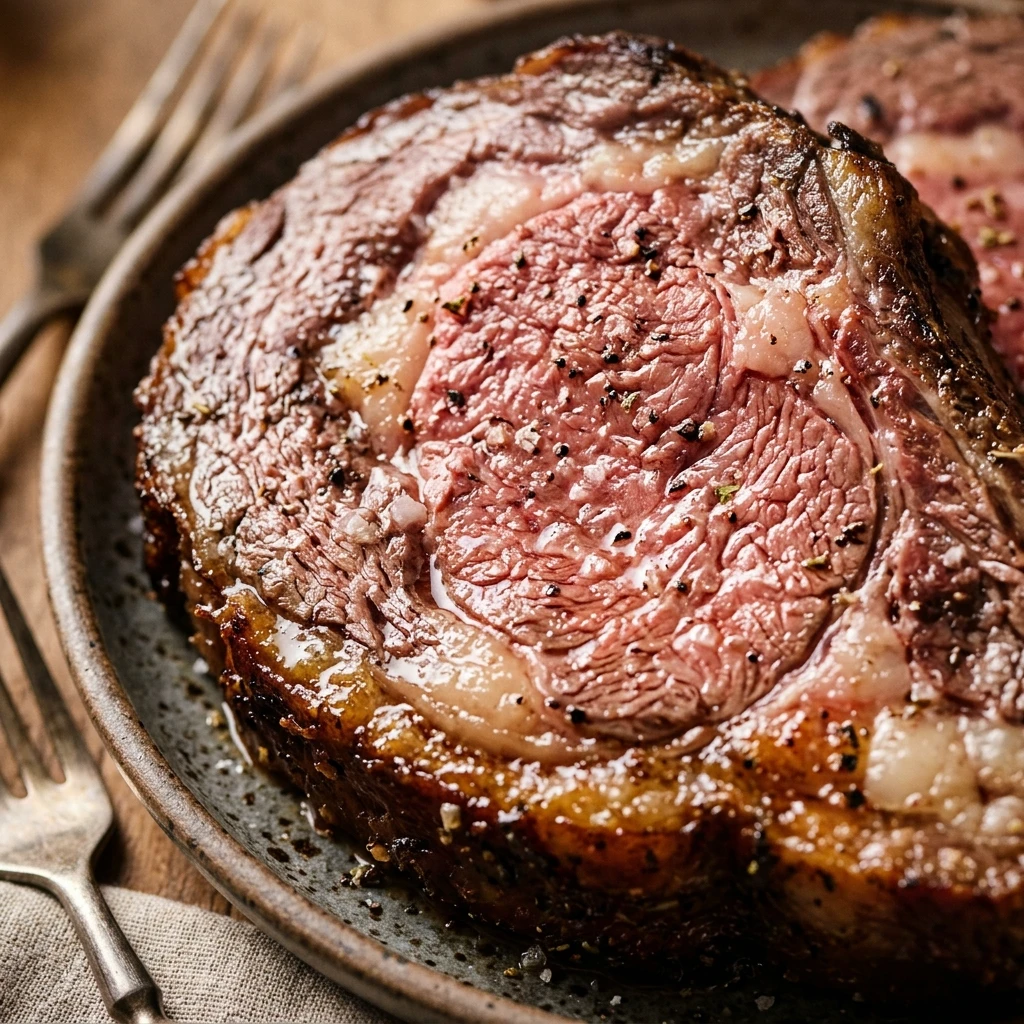
Every year for Christmas, I look forward to the rich aroma of a slow-roasted beef roast filling the kitchen while we gather around the tree. This Boneless Prime Rib is the crown jewel of our holiday table, offering a melt-in-your-mouth texture that makes the occasion feel truly special. I have found that skipping the bones makes the carving process much smoother, allowing me to serve beautiful, uniform slices to all my guests without any fuss.
Recipe Details
Recipe Information
- Prep Time: 20 minutes
- Cook Time: 2 hours 30 minutes
- Total Time: 2 hours 50 minutes
- Servings: 8 servings
- Difficulty: Medium
Nutrition Information (Per Serving)
- Calories: 645 kcal
- Protein: 42g
- Carbs: 2g
- Fat: 52g
Why You’ll Love This Boneless Prime Rib
This roast is the ultimate centerpiece for a Christmas feast because it combines elegance with ease of preparation. Since the bone is removed, the meat cooks more evenly and is incredibly simple to slice into thick, juicy portions. The herb and garlic crust creates a savory exterior that perfectly complements the tender, marbled interior. It is a reliable recipe that delivers restaurant-quality results, making your holiday hosting duties much less stressful while impressing everyone at the table.
Boneless Prime Rib Ingredients & Substitutions
- 6 to 8 pounds boneless beef rib roast, trimmed
- 4 tablespoons olive oil
- 6 cloves garlic, minced
- 2 tablespoons fresh rosemary, finely chopped
- 2 tablespoons fresh thyme, finely chopped
- 1 tablespoon kosher salt
- 2 teaspoons cracked black pepper
- 1 cup beef broth, for the roasting pan
- 2 tablespoons balsamic vinegar, for the herb paste
If fresh rosemary and thyme are unavailable, you can substitute them with one third of the amount in dried herbs. For those who want a sharper flavor profile, adding a tablespoon of prepared horseradish to the herb rub provides a wonderful kick. You can also use melted butter instead of olive oil to help the seasonings stick while adding a decadent, buttery finish to the crust.
Step-by-Step Instructions to Make Boneless Prime Rib
Step 1: Temper the Meat
Remove the roast from the refrigerator at least two hours before you plan to cook it. Bringing the meat to room temperature ensures that it cooks evenly from the edges to the center, which is essential for a large cut like this.
Step 2: Preheat and Prepare
Preheat your oven to 450 degrees Fahrenheit. While the oven heats up, pat the entire surface of the beef dry with paper towels. A dry surface is the secret to achieving a beautiful, golden-brown crust during the initial sear.
Step 3: Mix the Seasoning Rub
In a small bowl, combine the olive oil, minced garlic, chopped rosemary, thyme, salt, pepper, and balsamic vinegar. Stir until it forms a thick paste. The balsamic vinegar adds a deep color and a subtle tang that balances the richness of the beef.
Step 4: Season the Roast
Rub the herb mixture all over the boneless roast, making sure to cover the ends and the bottom. Place the meat on a roasting rack set inside a large roasting pan, with the fat side facing up. Pour the beef broth into the bottom of the pan to keep the drippings from burning.
Step 5: High Heat Sear
Place the roast in the preheated oven and bake at 450 degrees Fahrenheit for 15 to 20 minutes. This high-temperature start locks in the juices and creates a flavorful, savory exterior crust.
Step 6: Slow Roasting
Reduce the oven temperature to 325 degrees Fahrenheit. Continue roasting until a meat thermometer inserted into the thickest part of the beef reaches your desired temperature. For medium-rare, aim for 125 to 130 degrees Fahrenheit, as the temperature will continue to rise while resting.
Step 7: The Final Rest
Transfer the roast to a cutting board and tent it loosely with foil. Let the meat rest for at least 20 to 30 minutes. This allows the juices to redistribute throughout the roast, ensuring every slice is moist and tender.
Tips for Success
Always use a reliable meat thermometer rather than relying solely on the clock, as the shape and thickness of the roast can affect cooking times. Ensure you season the meat generously with salt, as a large roast needs plenty of seasoning to penetrate the thick layers of muscle. If you notice the drippings in the pan are drying out, add a little more broth or water to keep the pan moist, which also helps in making a delicious jus later.
Variations of Boneless Prime Rib
For a different flavor profile, you can create a mustard-crusted roast by adding two tablespoons of Dijon mustard to the herb rub. Another popular variation is the coffee-rubbed prime rib, where finely ground coffee beans and brown sugar are added to the spices for an earthy, smoky crust. If you enjoy a bit of heat, try adding a teaspoon of crushed red pepper flakes or smoked paprika to the garlic mixture.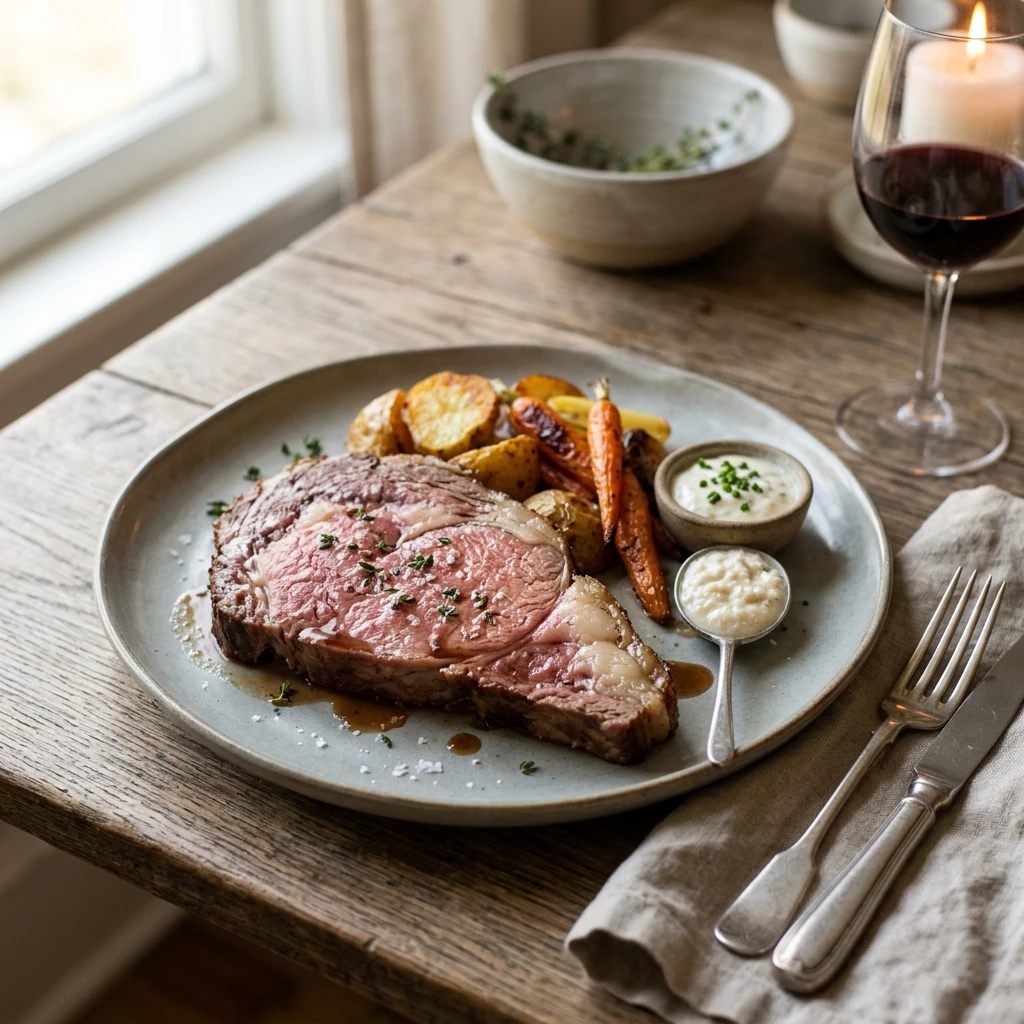
Serving Suggestions: What to Pair with Boneless Prime Rib
This roast pairs beautifully with classic Christmas sides like creamy mashed potatoes or a rich potato gratin. For vegetables, consider honey-glazed carrots or roasted Brussels sprouts with turkey bacon bits for a salty contrast. A simple jus made from the pan drippings and a bit of beef broth is the perfect finishing touch. You might also enjoy serving it with a side of creamy horseradish sauce to cut through the richness of the beef.
Storage & Reheating Instructions
Wrap any leftover roast tightly in plastic wrap or store it in an airtight container in the refrigerator for up to four days. To reheat, place individual slices in a baking dish with a splash of beef broth, cover with foil, and warm in a 300-degree Fahrenheit oven until heated through. This method prevents the meat from drying out or overcooking beyond its original doneness.
Memories Made Around the Table
Some of my fondest Christmas memories involve the entire family gathered around a beautifully set table, waiting for the first slice of this roast to be served. I remember my grandfather teaching me how to look for the perfect marbling at the butcher shop, explaining that those tiny ribbons of fat were the key to a tender meal. Now, every time I pull this Boneless Prime Rib out of the oven, I feel a connection to those past celebrations and the joy of sharing a labor of love with the people I care about most.
FAQs
What temperature should I pull the roast for medium-rare?
For a perfect medium-rare result, you should remove the roast from the oven when the internal temperature hits 125 to 130 degrees Fahrenheit. The temperature will typically rise another 5 to 10 degrees while the meat rests under the foil.
How much prime rib should I buy per person?
When serving a boneless roast, a good rule of thumb is to plan for about half a pound to three-quarters of a pound of raw meat per person. This usually accounts for some shrinkage during cooking and provides enough for hearty servings.
Do I need to sear the meat in a pan first?
While you can sear it in a pan, the high-heat oven method used in this recipe is much easier for large roasts. Starting the oven at 450 degrees Fahrenheit achieves the same browned crust without the mess of splashing oil on the stovetop.
Can I cook this roast with the bones still attached?
Yes, you can use this same herb rub and method for a bone-in roast. However, keep in mind that a bone-in roast may take slightly longer to cook, and you will need to adjust your carving technique to cut around the ribs.
How long can the roast sit at room temperature before cooking?
It is generally safe and recommended to let the roast sit out for about 2 hours to lose its chill. This ensures even heat distribution throughout the meat, preventing a cold center while the outside overcooks.
Final Thoughts
The Boneless Prime Rib is more than just a meal, it is a tradition that brings warmth and sophistication to any Christmas gathering. With its aromatic herb crust and tender texture, it remains a favorite for both the cook and the guests. I hope this recipe becomes a staple in your holiday repertoire, creating delicious memories for your family for years to come.
Boneless Prime Rib
- Total Time: 2 hours 50 minutes
Ingredients
- 6 to 8 pounds boneless beef rib roast, trimmed
- 4 tablespoons olive oil
- 6 cloves garlic, minced
- 2 tablespoons fresh rosemary, finely chopped
- 2 tablespoons fresh thyme, finely chopped
- 1 tablespoon kosher salt
- 2 teaspoons cracked black pepper
- 1 cup beef broth, for the roasting pan
- 2 tablespoons balsamic vinegar, for the herb paste
Instructions
- Step 1: Temper the Meat – Remove the roast from the refrigerator at least two hours before you plan to cook it. Bringing the meat to room temperature ensures that it cooks evenly from the edges to the center, which is essential for a large cut like this.
- Step 2: Preheat and Prepare – Preheat your oven to 450 degrees Fahrenheit. While the oven heats up, pat the entire surface of the beef dry with paper towels. A dry surface is the secret to achieving a beautiful, golden-brown crust during the initial sear.
- Step 3: Mix the Seasoning Rub – In a small bowl, combine the olive oil, minced garlic, chopped rosemary, thyme, salt, pepper, and balsamic vinegar. Stir until it forms a thick paste. The balsamic vinegar adds a deep color and a subtle tang that balances the richness of the beef.
- Step 4: Season the Roast – Rub the herb mixture all over the boneless roast, making sure to cover the ends and the bottom. Place the meat on a roasting rack set inside a large roasting pan, with the fat side facing up. Pour the beef broth into the bottom of the pan to keep the drippings from burning.
- Step 5: High Heat Sear – Place the roast in the preheated oven and bake at 450 degrees Fahrenheit for 15 to 20 minutes. This high-temperature start locks in the juices and creates a flavorful, savory exterior crust.
- Step 6: Slow Roasting – Reduce the oven temperature to 325 degrees Fahrenheit. Continue roasting until a meat thermometer inserted into the thickest part of the beef reaches your desired temperature. For medium-rare, aim for 125 to 130 degrees Fahrenheit, as the temperature will continue to rise while resting.
- Step 7: The Final Rest – Transfer the roast to a cutting board and tent it loosely with foil. Let the meat rest for at least 20 to 30 minutes. This allows the juices to redistribute throughout the roast, ensuring every slice is moist and tender.
- Cook Time: 2 hours 50 minutes
- Diet: Low-Carb, Gluten-Free